Recommended IoT SIM cards for charging piles: Pay-as-you-go pricing to effectively control project costs.
Multiple charging points with uneven traffic consumption. Pay-as-you-go IoT SIM cards eliminate fixed plan waste, helping charging station projects control communication costs.
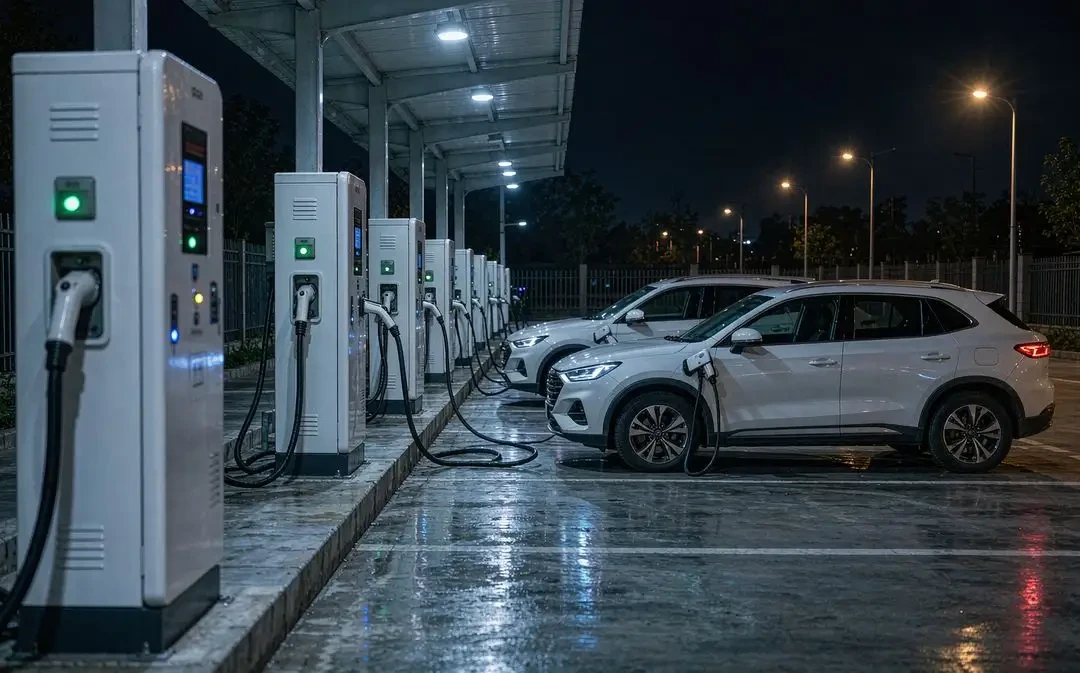
Untracked traffic means uncontrollable costs.
With numerous charging stations and uneven usage, how can you optimize communication costs? This article breaks it down from an industry technology perspective.
A charging station project often involves dozens or even hundreds of locations, with a mix of fast and slow chargers. This leads to long queues during peak hours and idle resources at night. The industry standard is to use IoT cards that support pay-as-you-go billing—pay only for what you use. However, many projects still rely on flat-rate data plans per SIM card, resulting in wasted traffic during off-peak times and insufficient capacity when demand spikes.
Traffic usage for 01 charging piles is highly uneven.
Fast chargers handle authentication, order creation, metering reports, and status updates in a single session—generating significant message volume. Slow chargers typically send only a few heartbeats plus one order per day. At the same site, usage patterns differ by an order of magnitude when viewed from a pay-per-use perspective. Add to that the sharp fluctuations between holiday surges and weekday lulls, and fixed quotas naturally fail to align with actual consumption.
Digging deeper: a slow charger typically consumes only a few MB of data per month, while a fast charger may use over 100 MB—fluctuating with seasons, location, and promotions. A mall station might see long queues in summer, whereas a suburban one could remain idle all month. Value-based billing aligns charges with actual usage: you pay only for what you consume, saving money on unused data during off-peak periods.
Switch 02 to pay-as-you-go. Here's how to reconcile your bill.
How to choose IoT SIM cards for EV charging stations? Don't start with the brand; first, ensure billing aligns with actual usage. Switching to pay-as-you-go is just the beginning. The real cost savings come from these three reconciliation steps:
· Download StatementExport monthly traffic details by location, highlighting high-consumption points and zero-traffic SIMs to clarify where spending occurs.
· Scenario-based verification:Fast and slow charging usage benchmarks are calculated separately: fast charging relies on message reports and order volume, while slow charging focuses on heartbeat frequency and online duration.
· Set threshold:Set a monthly usage limit per card to detect abnormal traffic the same day, instead of waiting until month-end reconciliation.
IoT card management has tightened over the past two years: real-name registration, tiered supervision, and usage reporting are now standardized. For legitimate projects, applying based on actual use cases and maintaining proper records makes future scaling smoother. Reducing communication costs isn't about swapping cards—it's about aligning your site counts, usage data, and billing statements.
Plans are templates; usage is your bill.
Need global IoT SIM pricing comparison or selection advice?
Tell us your target country and device usage, and we'll compile the corresponding pricing plans and recommendations for you.
Related Reading
- For shared power bank expansion overseas, evaluate the target country and backhaul routing first.Tech News · 2026-11-16
- Can legacy devices that only support 2G still use IoT SIM cards?Tech News · 2026-11-16
- Annual procurement locks unit price and total volume, not the entire package.Tech News · 2026-11-16