Hong Kong SIM APN Settings: 4 Parameters to Verify Before Connecting
LTE and 5G NR are widely deployed in Hong Kong. After device deployment, service connectivity failures are rarely due to signal issues; they typically stem from APN misconfiguration. This article breaks down the four key parameters—APN name, username/password, authentication method, and PDP type—and provides a troubleshooting sequence for three common failure scenarios along with methods to lock configurations on mass-produced devices.
Hong Kong's cellular network standards match mainland China, with LTE and 5G NR widely deployed. After device deployment, connectivity failures are rarely due to signal issues; they typically stem from misaligned APN configurations. The Access Point Name (APN) is the identifier a device uses to declare its data channel to the network. If the APN parameters are incorrect, the attachment process may succeed, but user data cannot be transmitted.
APN is a combination of four parameters, not a single string.
Many on-site staff mistakenly treat the APN as a simple name, assuming that entering it completes the configuration. A full access setup typically includes four components: the APN name itself; username and password (required for some private networks or dedicated plans, but left blank for public plans); authentication method (commonly PAP, CHAP, or none); and PDP type, which determines whether the device requests an IPv4, IPv6, or dual-stack address.
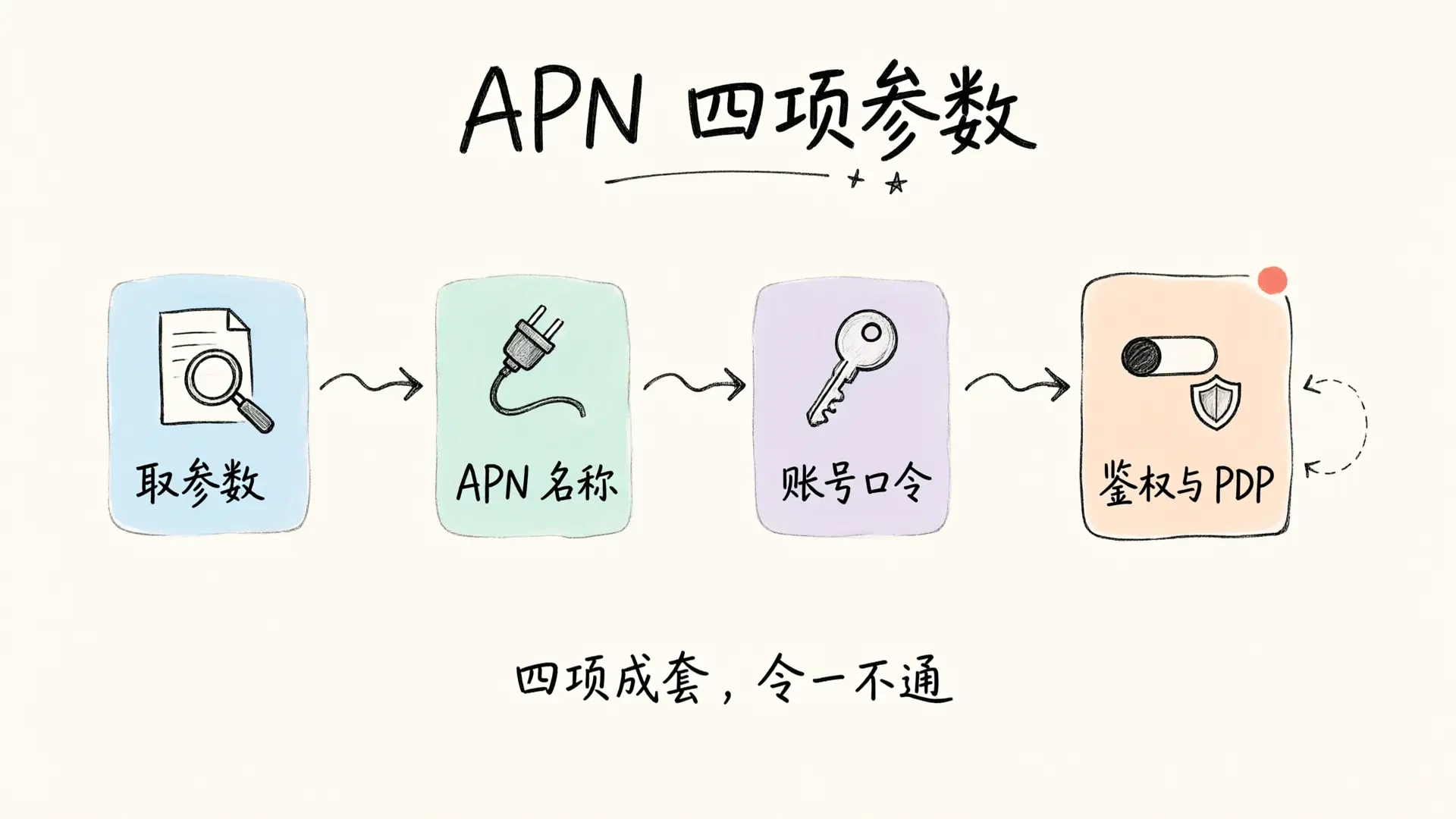
These four items must be used as a set. If the name is correct but the PDP type is incorrectly set to IPv4, IPv6 services will fail silently with no obvious errors in the logs. There is only one source for these parameters: the card issuer. Configuration can vary by region, batch, and plan. Copying generic values found online shifts risk to the deployment site.
Troubleshooting sequence for three common faults
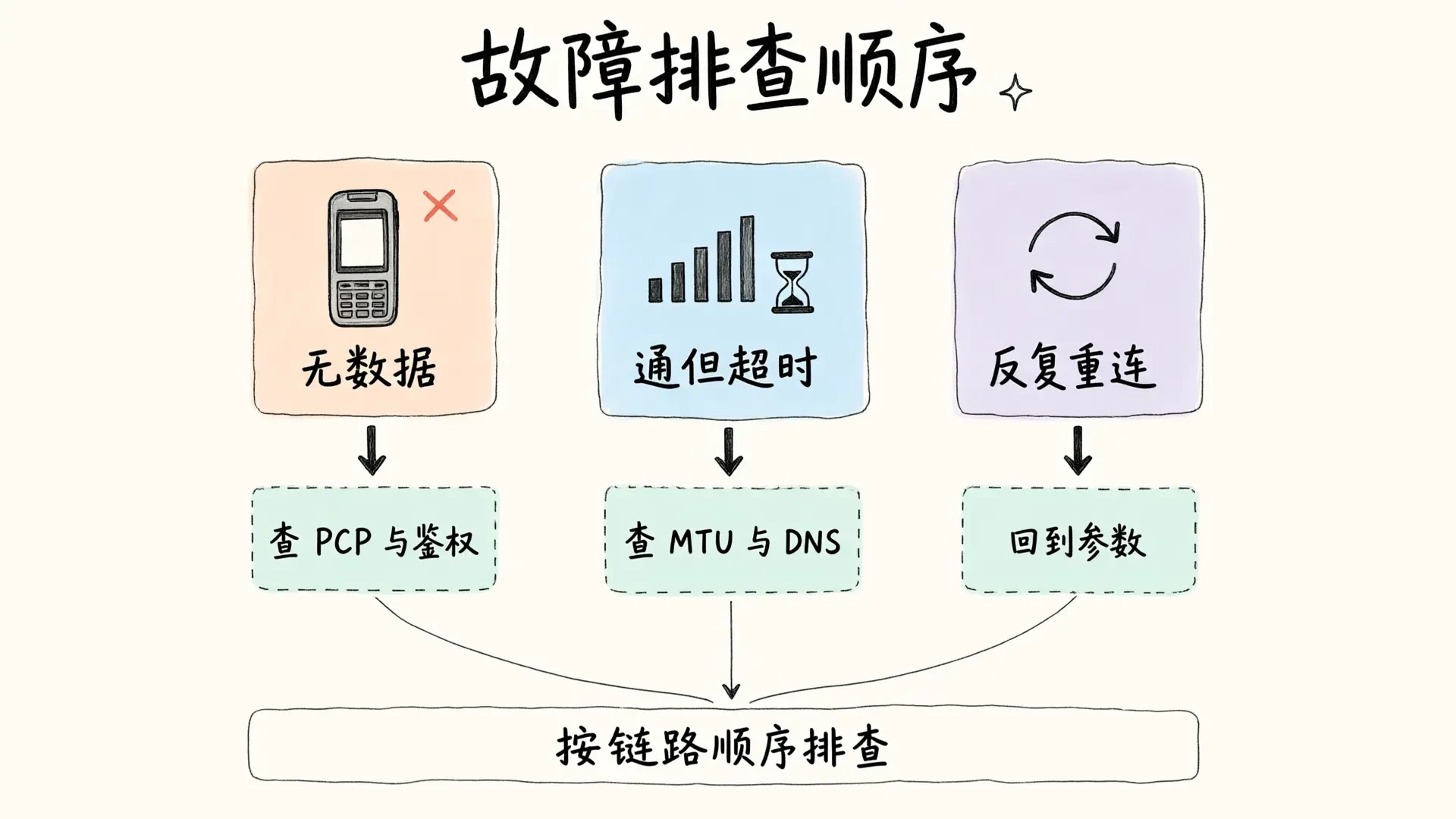
The first scenario is when the terminal displays a registered network but fails to establish a data connection. In this case, verify the PDP type and authentication method, then check if the data roaming toggle is enabled on the device. If a Hong Kong SIM card is roaming in mainland China or a third country, failing to enable this switch will result in the data channel being rejected.
The second scenario involves cases where the IP is reachable and the gateway responds to pings, but application requests time out. This is often caused by MTU or DNS issues. Since 4G/5G link MTU differs from wired networks, large packet fragmentation failures can result in "network connectivity works, but applications fail."
The third type is connection re-establishment. This issue often stems from a mismatch between APN settings and network-side session persistence policies. You need to review the parameters directly to ensure that configuration fragments from different plans are not being mixed.
Push configuration to production line in bulk instead of leaving it on-site.
Manual verification works for single units but doesn't scale to thousands. Instead, hardcode APN settings into the device's factory configuration or remote management policies so they deploy with the SIM and adapt to the use case. eSIM modules paired with provisioning tools allow you to remotely switch numbers and access configurations without swapping physical cards. This enables a single device to serve multiple markets without maintaining separate card inventory for each region.
We provide connectivity coverage in 200+ countries and regions for Datong International's IoT SIM cards. APN and other access parameters are delivered with the SIM, and technical consultants respond to on-site troubleshooting requests within 24 hours. For Hong Kong SIMs, key APN configuration practices include: deriving parameters from the issuer, advancing troubleshooting along the link sequence, and embedding configurations into production workflows.
Need global IoT SIM pricing comparison or selection advice?
Tell us your target country and device usage, and we'll compile the corresponding pricing plans and recommendations for you.
Related Reading
- Why does SIM-card removal trigger service suspension? First, understand the IMEI binding chain.Tech News · 2026-11-13
- How to choose an international IoT SIM card? eSIM, SMD packaging, and data pooling are three different things.Tech News · 2026-11-13
- International IoT SIMs Through the "Six Networks": Three Connectivity Hurdles for Overseas DevicesTech News · 2026-10-30